
"But They're in the Shade!" Why Babies Can Still Get UV Damage Without Getting Sunburned
TLDR
Shade is one of the best ways to reduce UV exposure, but it isn't complete protection. UV rays can reflect off water, sand, concrete, snow, and even light-colored surfaces, meaning babies can still receive significant UV exposure while sitting under an umbrella or stroller canopy. That's why experts recommend combining shade with UPF clothing, hats, and sunscreen for exposed skin.
Introduction
You've probably said it yourself: "Don't worry, they're in the shade."
It's one of the most common assumptions parents make, and while shade is incredibly important, it doesn't completely block ultraviolet (UV) radiation.
In fact, babies can receive UV exposure without ever sitting in direct sunlight, and without developing an obvious sunburn.
Understanding the difference between UV exposure and visible sunburn is one of the most important parts of protecting your child's skin.
UV Damage vs. Sunburn: They're Not the Same Thing
Sunburn is an immediate, visible sign that skin has been damaged by ultraviolet radiation. But UV damage begins long before skin turns pink.
Think of a sunburn as the smoke alarm. The damage starts before the alarm goes off.
That means a child can accumulate UV exposure even if they never come home looking burned. Since UV damage builds over a lifetime, protecting skin early matters, even on days when there's no obvious redness.
Shade Reduces UV, It Doesn't Eliminate It
Shade blocks a significant amount of direct sunlight. But UV rays don't only travel in a straight line from the sun; they also bounce off surrounding surfaces.
That means babies sitting beneath beach umbrellas, pop-up tents, trees, stroller canopies, or covered patios can still receive indirect UV exposure.
The amount depends on the environment and the UV Index, but shade alone isn't considered complete sun protection.
The Biggest UV Reflectors
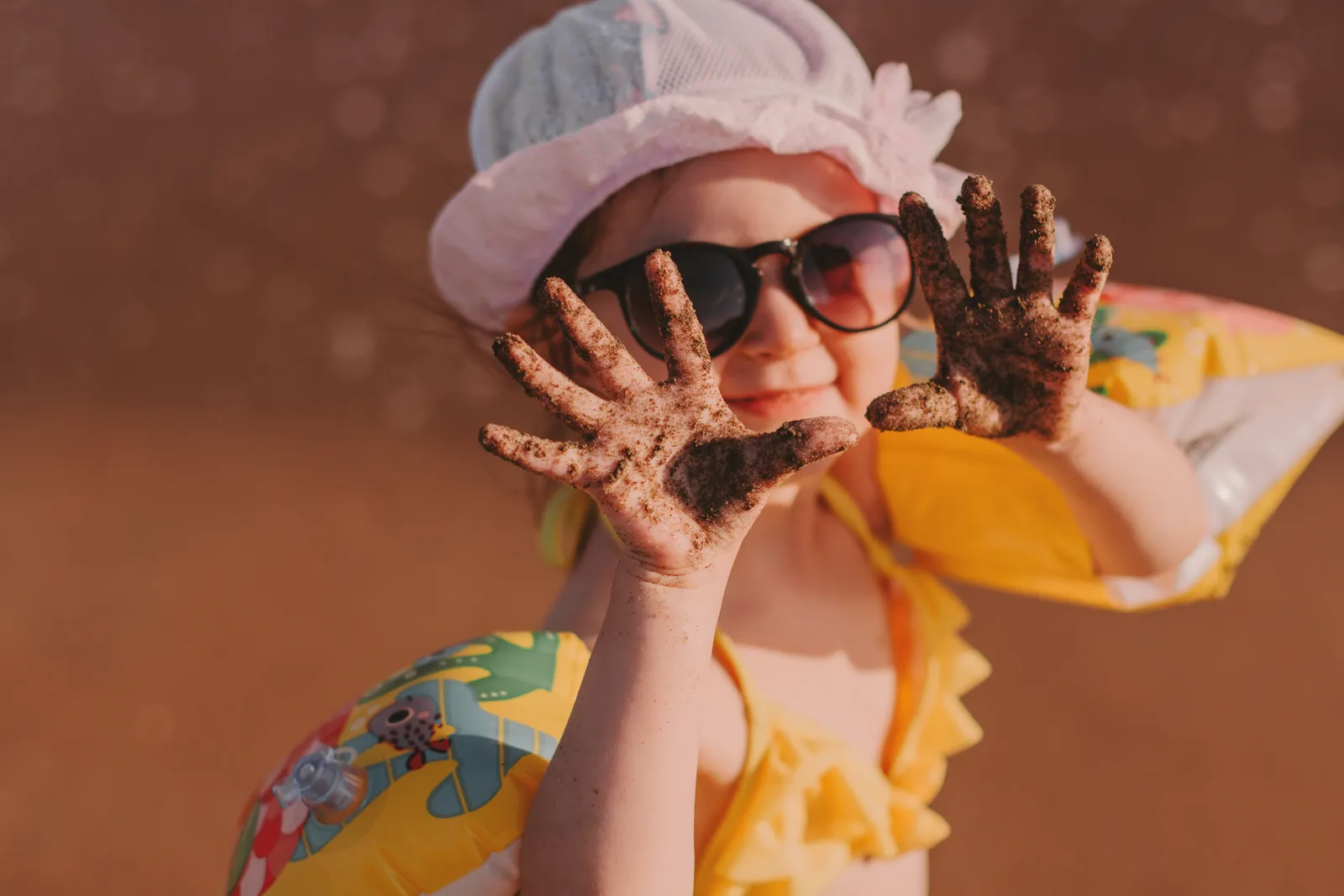
Some outdoor environments dramatically increase UV exposure because they reflect sunlight back onto the skin, which is why families often notice unexpected sunburns after beach days or afternoons on the boat, even when they spent much of the day under an umbrella. Common reflectors include:
- Water
- Sand
- Snow
- Lakes
- Boats
- Light-colored rock
- Concrete
- White buildings
Why Babies Are Especially Vulnerable
Babies have thinner, more delicate skin than adults. They also can't tell us when they're getting too much sun or move themselves into better shade.
Because their skin is still developing, pediatricians recommend relying primarily on physical sun protection for young infants, including shade, UPF clothing, hats, and limiting direct sun exposure.
For older babies and toddlers, sunscreen becomes another important layer of protection for exposed skin.
Layer Your Protection
Think of sun safety like wearing a seatbelt. You wouldn't rely on just one safety feature.
The best protection comes from combining multiple layers: seek shade when possible, wear UPF-rated clothing that covers as much skin as practical, apply sunscreen to exposed skin, protect the face, ears, neck, hands, and feet, and avoid extended outdoor exposure during peak UV hours when possible.
No single strategy is perfect, but together they work remarkably well.
Why We Designed TrailTog
Parents already have enough to think about. We designed TrailTog to make one layer of sun protection simpler.
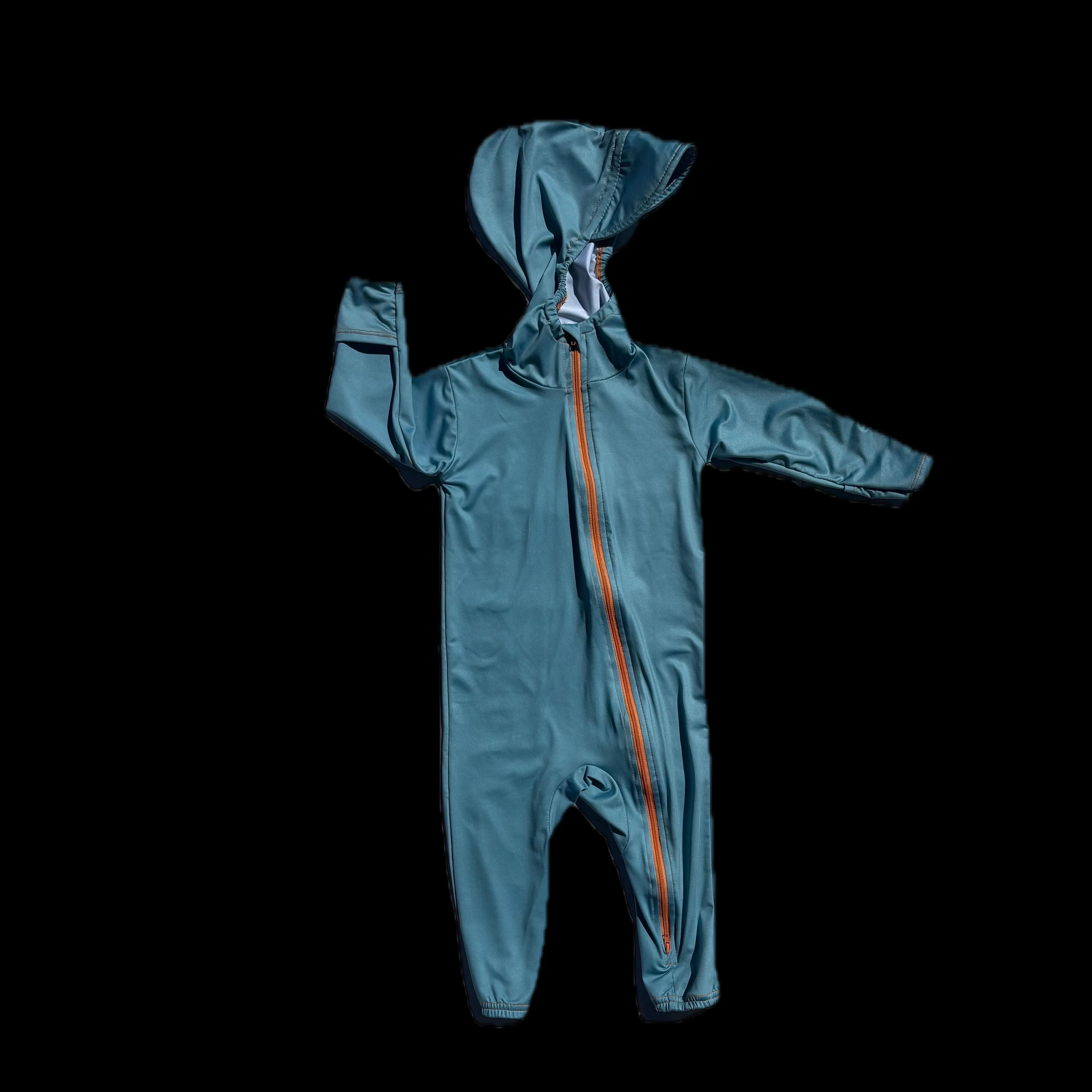
With UPF 50+ fabric, head-to-toe coverage, an integrated hood and visor that stays in place, fold-over hand coverage, and integrated footies on infant sizes, TrailTog helps reduce the amount of skin exposed to indirect UV rays during everyday adventures.
Whether you're spending the day at the lake, relaxing under a beach umbrella, hiking a shaded trail, or enjoying a stroller walk, it's designed to make sun protection one less thing to worry about.
Common Questions and Answers
Q: Can my baby get UV exposure in the shade?
Yes. Shade significantly reduces direct UV rays but doesn't eliminate reflected or scattered UV radiation. That's why experts recommend combining shade with protective clothing and sunscreen on exposed skin.
Q: Can babies get sunburned under an umbrella?
Yes. Beach umbrellas reduce direct sunlight, but UV rays reflected from sand and water can still reach exposed skin.
Q: If my child didn't get sunburned, were they protected?
Not necessarily. The absence of a sunburn doesn't always mean there was no UV exposure. Skin can accumulate UV damage before redness becomes visible, which is why consistent protection is important.
Q: Is shade still worth using?
Absolutely. Shade is one of the best ways to reduce UV exposure. It simply works best when combined with UPF clothing, hats, and sunscreen for exposed skin.
Key Takeaways
- UV exposure and sunburn are not the same thing.
- Skin damage begins before redness appears.
- Shade reduces UV exposure but doesn't eliminate it.
- Reflected UV from water, sand, concrete, and snow still reaches the skin.
- Babies have especially sensitive skin and benefit from multiple layers of protection.
- The best sun safety strategy combines shade, UPF clothing, sunscreen, and smart timing.
Call to Action
We're not trying to keep families indoors. We're trying to help families enjoy every fishing trip, beach day, hike, picnic, and park adventure with confidence.
Because the goal isn't to avoid the sunshine. It's to enjoy it safely.